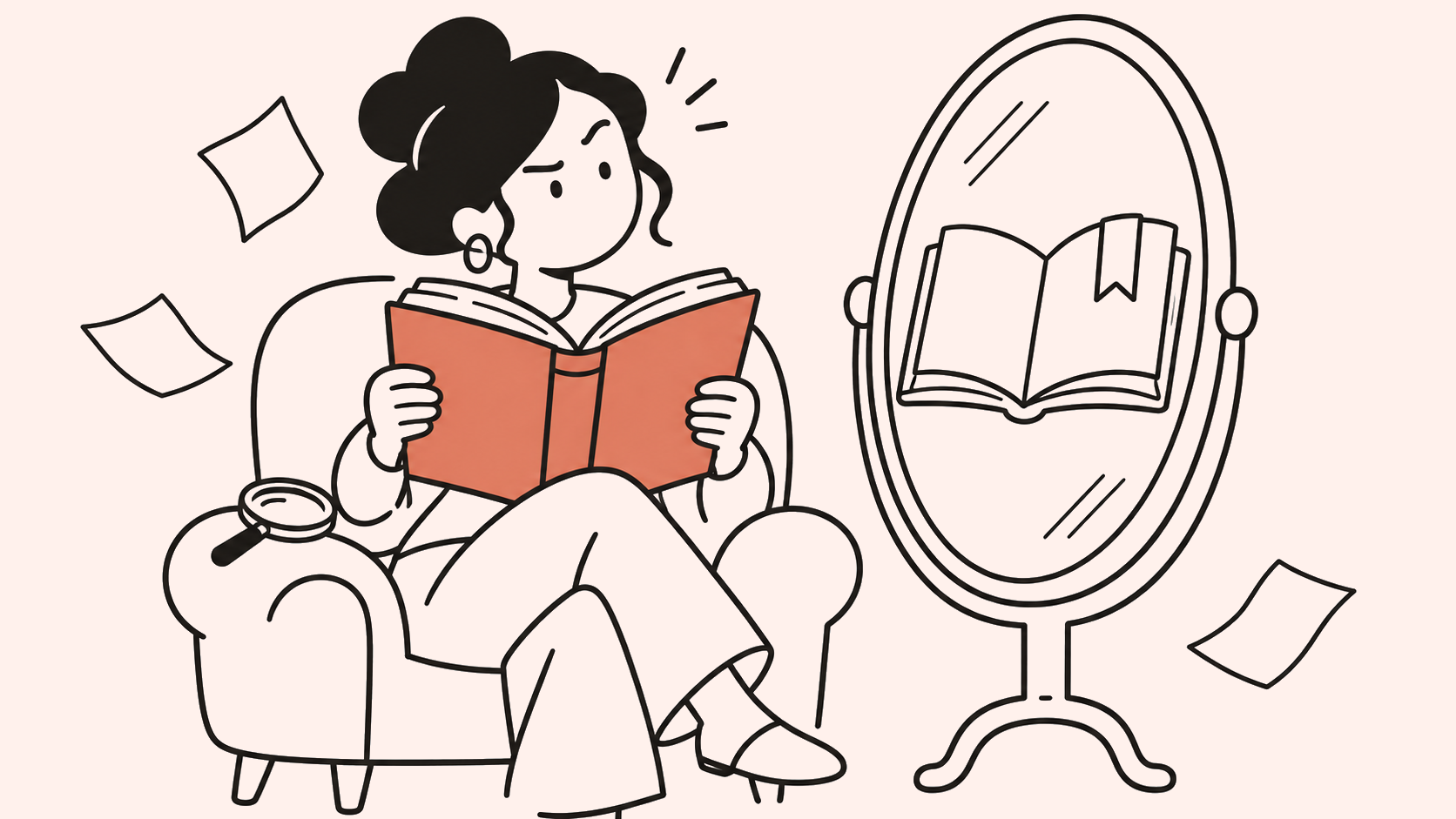
About twenty minutes into the meeting, somebody says, "Wait, so was any of that true?" Half the room has been trusting the narrator for 300 pages. The other half spotted the cracks in chapter four and has been waiting to say so.
That moment is the whole reason to pick a book with an unreliable narrator. The trick is knowing how to run the conversation so it doesn't collapse into "who guessed the twist first."
An unreliable narrator is a storyteller whose account you can't take at face value. That's the whole definition, but it hides a useful point: there are several different ways to be unreliable, and your group will argue better once it can tell them apart.
- The liar. The narrator knows the truth and hides it from you on purpose.
- The self-deceiver. The narrator believes their own version, even when the evidence says otherwise.
- The limited witness. The narrator is honest but missing key information, or too close to the events to see them clearly.
- The biased judge. The narrator tells the facts straight but colors every one of them with a strong opinion.
Put those four on a whiteboard or a sheet of paper before you start. Then ask people to sort the narrator into a category. They will not agree, and that's where the discussion lives.
Plot-twist books get a bad reputation in book clubs because once the secret is out, the talking is done. Unreliable narrators avoid that trap, because the interesting part isn't what was hidden. It's why this person told the story this way.
A good unreliable narrator also forces readers to show their work. "I didn't buy it" isn't enough. Somebody has to point to the page where things stopped adding up, and suddenly your group is doing close reading without anyone calling it that.
One warning before you pick: these books are the ones where your spoiler policy matters most. Decide up front whether the ending is fair game, and say so in your invite.
Keep these in your notes. They work for nearly any book where you can't fully trust the person talking.
- When did you first stop trusting the narrator? Ask for a page or a scene. Some people will say chapter two, others will say they never did, and both answers are interesting.
- Which narrator type are they: liar, self-deceiver, limited witness, or biased judge? Make people defend the label.
- What did the narrator gain by telling it this way? Unreliable narrators almost always want something — sympathy, forgiveness, an audience, or a way to avoid looking at themselves.
- What did you believe that you now think was wrong, and who gave you the idea? This one works especially well, because it makes readers examine their own assumptions instead of just judging the narrator's.
- Is there a version of the story where this person is telling the truth? A surprising number of groups find one.
- Did the author play fair? Were there clues on the page, or did the twist come out of nowhere? Readers feel strongly about this, and it's a clean way to talk about craft.
- Would you reread the book knowing what you know now? Reread value is one of the best tests of whether the unreliability was earned.
You don't need all seven. Pick three, and leave room for the room to wander.
Each of these has a ready-made discussion kit, and each one is unreliable in a different way. That makes them useful for a themed meeting or for comparing across a few months of reading.
Lowen finds a hidden manuscript that claims to be the true story behind a bestselling author's marriage. Then the question becomes whose account to believe, and whether the manuscript is a confession or a performance. This is the best pick on the list for readers who want to argue about the ending, because the book leaves real room for both readings. Get the Verity book club kit for questions on the manuscript and the final pages. If your group wants more of the author, browse Colleen Hoover's author page, or start with our Verity discussion questions.
A woman stops speaking after a violent act, and a therapist becomes determined to get her to talk. The book gives you two voices and asks you to weigh them. It's a strong choice for groups that like to trace a clue back through earlier chapters. Get the The Silent Patient book club kit and read the full-spoilers question guide once everyone has finished.
Millie takes a live-in job with a wealthy family, and her cheerful first-person account of the household gradually stops matching what she's noticing. It's a good fit for readers who like fast pacing and a big mid-book shift. The discussion tends to land on how much the narrator chose to leave out. Get the The Housemaid book club kit for questions that deal with the twist carefully, or read our Housemaid question guide. More from the writer is on Freida McFadden's author page.
Nick Carraway tells us early that he's "inclined to reserve all judgments," and later calls himself "one of the few honest people that I have ever known." Then he spends the book judging everyone. Gatsby is a short, classic example of the biased judge, and it makes a fine starting point for a group that's new to talking about narrators. Get the The Great Gatsby book club kit or see our Gatsby discussion guide.
This one isn't fiction, which is exactly why it belongs on the list. Tara Westover's memoir includes footnotes where her memory differs from her family's, and she says so openly. That raises a question every memoir reader has to face: how reliable can any one person's account of their own life be? Get the Educated book club kit and ask your group to find the footnotes. Our Educated question guide has more to work with.
A few things make these discussions run smoothly.
Start with the verdict, not the plot. Ask for a quick show of hands: trusted the narrator the whole way, lost trust midway, never trusted them. Seeing the room split is a good opening for the rest of the night.
Make people point at the page. If someone says the narrator was lying, ask where. You're not trying to catch anyone out. You're nudging the group toward evidence, which makes the conversation more fun and less like a vote.
Let the unconvinced speak first. Readers who loved the twist tend to talk the longest. Readers who felt cheated often have the sharpest points about craft, so give them the first word.
Watch for the readers who guessed early. They can unintentionally flatten the night for everyone else. Ask them how they knew rather than what they knew, and the conversation stays about the book's technique instead of a guessing contest.
Pair it with an unlikeable-character conversation. The two topics overlap a lot. If your group enjoyed this approach, our guide to discussing unlikeable characters pairs well with it.
For more on keeping the conversation moving once it gets going, see how to start a book club discussion.
If you want a full set of discussion questions, food pairings, icebreakers, and printable decorations for any of these books, search for your book on Instant Book Club and get a complete kit in 30 seconds. Browse the thriller and mystery genre page for more picks where the narrator might not be telling you everything.