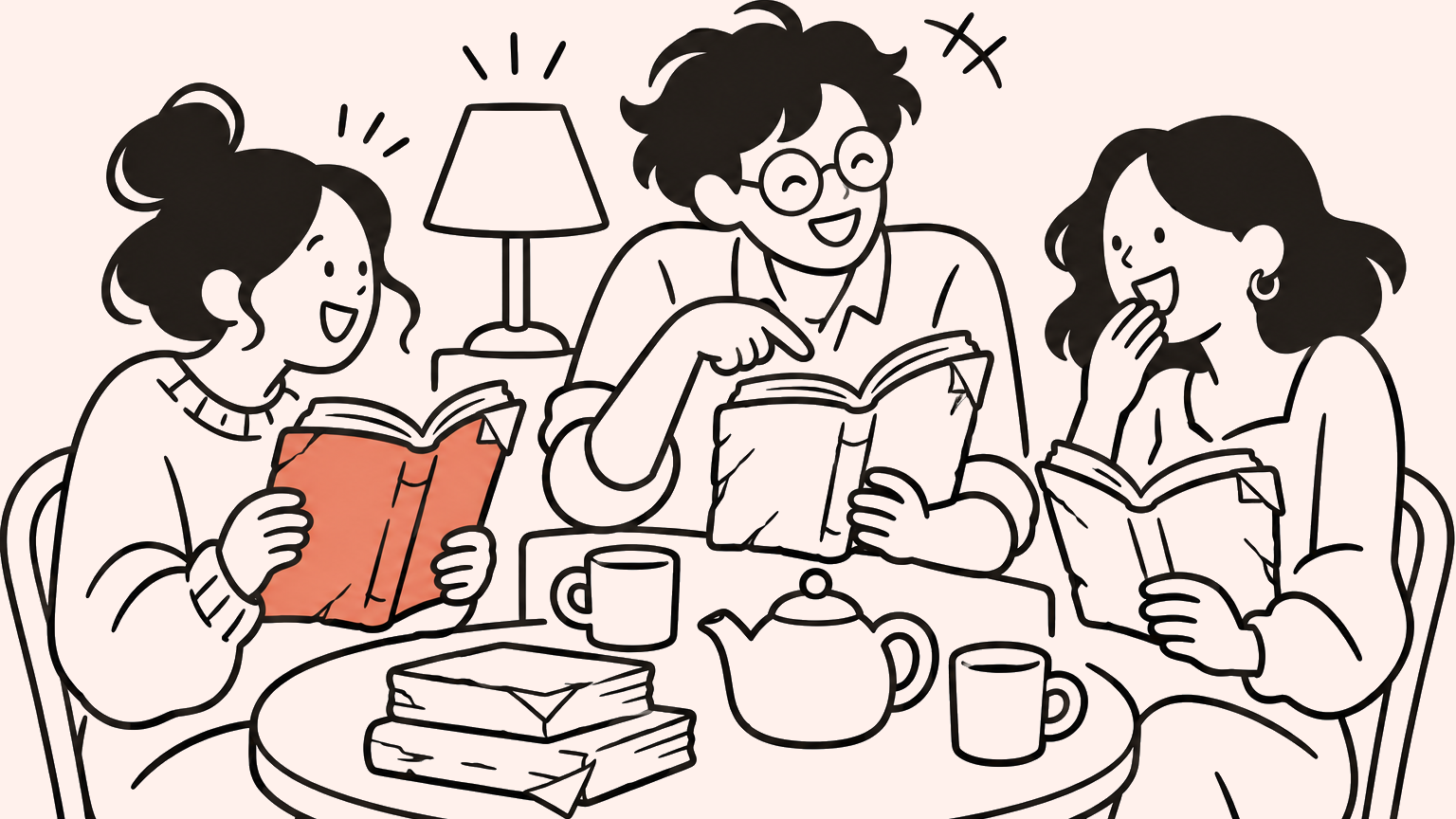
Every book club has a pile of books that members still bring up years later. "Remember when we read that one?" comes with a warm look and a little sigh. Nobody says it about the pick that was fine. They say it about the ones that stayed with them.
A reread book club meeting is how you go back for those. You skip the hunt for something new, you spend the night on a book your group already cares about, and you find out how much has changed since the first time through. It is also the easiest meeting to prep when the season is busy.
Reading a book a second time is a different experience, and your group will notice it right away. The plot no longer pulls you along, so you see the structure instead. Foreshadowing that slid past you the first time suddenly looks obvious. Characters you judged harshly at twenty-five may look different at forty.
That gives you a few real advantages as a host:
- Nobody is surprised by the ending. You can talk freely about the whole book from the first minute, which makes the spoiler question a non-issue.
- People finish. A familiar book is easier to get through, and skimming back to favorite scenes counts as reading.
- The conversation goes deeper. Instead of "what happened," the group gets to "why did the author build it this way."
- It fits the season. Early November is when the clocks change, evenings get dark fast, and holiday planning starts eating the calendar. A comfort reread is a gift to a group that is already stretched thin. If your members seem tired, our guide to a book club reading slump explains why this timing is tricky.
Not every book rewards a second look. The best reread picks share a few traits.
You want a story that has more going on than plot. Style, symbolism, narration, and moral weight all give people something new to find. Good candidates include:
If you like the classics idea, browse the classics genre page for more. And if one author keeps coming up in your group, the Madeline Miller author page is a good place to start a backlist run.
The best source is your own club. Scroll back through your past picks and look for the ones that split the room, or the ones everyone loved. A book that caused a real argument is a great reread, because people have had time to change their minds.
Some members will have read it years ago, and some never did. That is fine. Mixed familiarity creates good conversation, because the first-timers react to things the rest of the group stopped noticing. Just agree up front that nobody gets spoiled by accident, or that spoilers are fair game, and say which one.
A reread meeting needs a different set of questions than a first read. If you reuse the same list, people will give the same answers they gave last time.
Open with the most useful question you have: what did you notice this time that you missed before? It gets everyone talking and it does not require anyone to have an opinion ready. Follow it with "did your view of any character change?"
For more openers that work in any room, see our list of opening questions to start a book club discussion.
Ask people when they first read the book and what was happening in their life. The answers get personal quickly, in a good way. Someone read Pride and Prejudice in a college lit course. Someone else read The Kite Runner the year they became a parent. Those stories do more to bring a group together than any prepared question.
This is where a reread shines. Try questions like these:
- Which early scene felt different now that you know the ending?
- What detail did you only notice this time?
- Whose side did you take the first time, and is it the same now?
- Does the book still earn its reputation?
- What would you cut, or wish the author had spent more time on?
If you want a long supply of prompts that work for any book, our book club questions to ask post has plenty you can borrow.
A reread should lower the effort, not raise it. A few small touches help.
Give people a lighter assignment. Instead of "finish the whole book again," try "reread your favorite three chapters and bring one passage." Most members will end up reading more than that anyway.
Ask them to mark passages. If your members kept notes the first time, ask them to bring them. A reader who finds an old margin note from five years ago will not stop talking about it. Our note-taking tips cover simple ways to do this.
Set the date with the season in mind. A shorter book can go into a busy month, while a long reread works better when the calendar is open. The book club calendar planning guide shows how to place a reread meeting between heavier picks.
Because the book is familiar, you have room to build a bit of atmosphere around it.
- Reread-and-compare. Ask each member to bring their old copy. Notice how many editions, covers, and dog-eared pages show up.
- A "then and now" round. Everyone shares one opinion they held the first time and one they hold now.
- A themed menu. Pair the food to the book's setting, from tea and scones for Austen to something Mediterranean for Circe.
- A short reading aloud. Pick one favorite paragraph and have a member read it to the room. It works particularly well with the opening of The Great Gatsby.
A reread meeting is one of the lowest-stress ways to host, and one of the most rewarding for the group. You do not need to find a new title, convince people to buy it, or worry about who will finish.
Search for your book on Instant Book Club and get a complete kit in 30 seconds, with discussion questions, icebreakers, and food pairings you can adapt for a reread. You can also search for any title your group has loved and build a night around it.
Looking for more ideas? Start with our guide on how to run a book club on a long book or revisit the book club vibe board guide to set the mood for your next meeting.