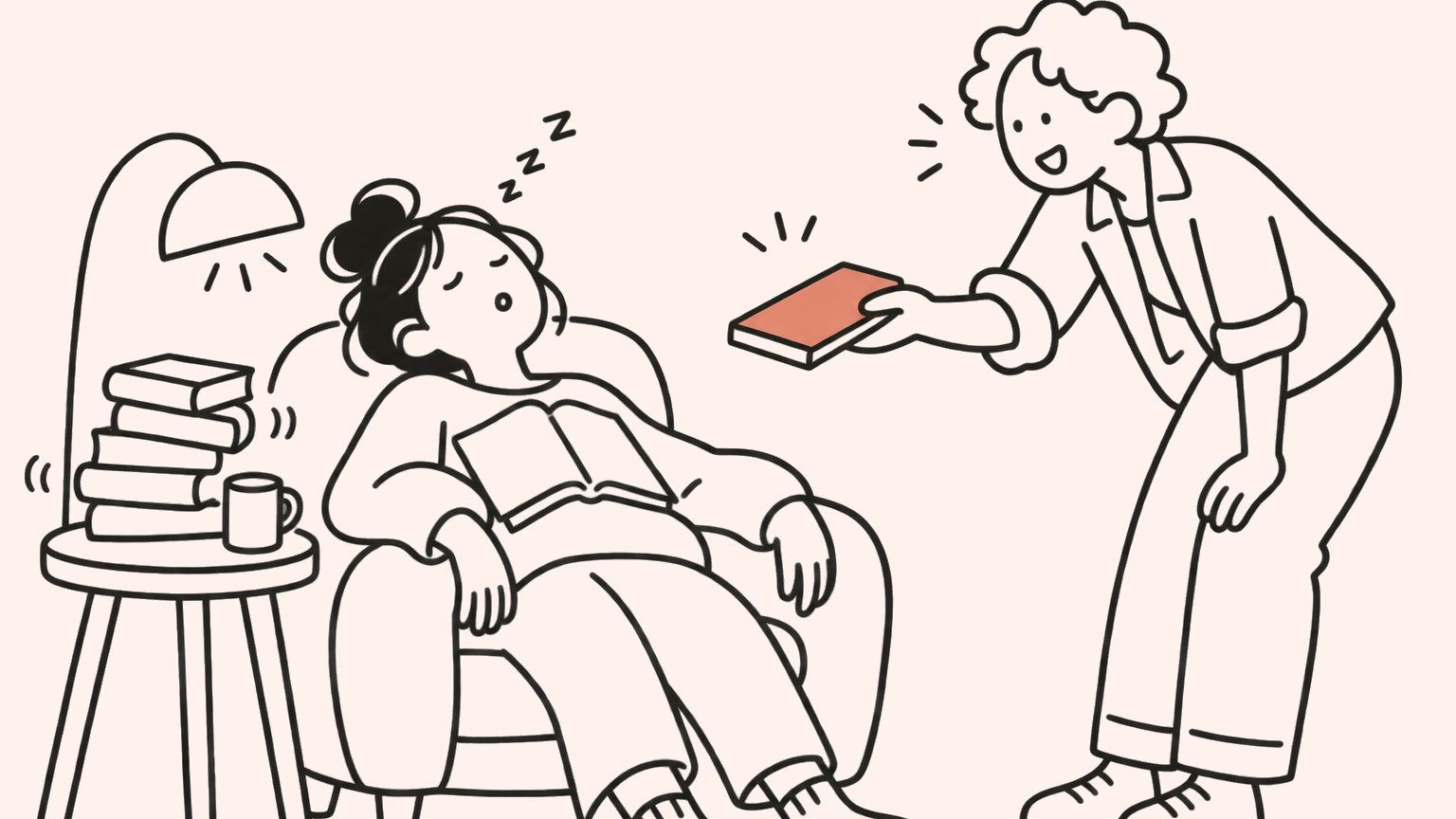
It starts quietly. Two people say they are "about halfway." Someone admits they only read the first three chapters. By the next meeting, the host is the only one who finished, and the conversation lasts twenty minutes before drifting to somebody's kitchen renovation.
That is a book club reading slump, and nearly every group hits one. It is not a sign the club is dying. It is a sign the reading load, the book choices, or the season no longer match your members' real lives. Here is how to recognize it early and get everyone turning pages again.
One missed book is life. A pattern is a slump. Watch for these:
- The finish rate keeps dropping. Where eight of ten people used to finish, now it is four.
- Discussion dies early. You get through your questions in half the usual time because nobody has anything to say.
- Excuses turn into apologies. People start the meeting with "I am so sorry, I didn't get to it" before they have even sat down.
- Attendance slips. Members skip the night rather than show up unprepared.
That last one is the real danger. People do not leave a club because they dislike the people. They leave because they feel behind. If you are already seeing no-shows, our guide on how to handle book club no-shows covers the attendance side.
Before you fix anything, work out the cause. The fix for a scheduling problem is not the same as the fix for a book problem.
Three dense, serious books in a row will wear out almost any group. Slow, sad, or 500-page reads are great in moderation, but a run of them turns reading into homework.
Early November is a classic slump window. The clocks go back, evenings get dark fast, and work and holiday planning start piling up. Energy for a demanding book drops right when schedules get tighter.
Three weeks is tight for a long book. Six weeks is long enough that people forget they are in a club. If your timing is off, look at our book club calendar planning guide for a rhythm that fits real schedules.
If one member always chooses and the rest are politely suffering, the slump is really a selection problem. A book that only a third of the group wanted will be finished by about a third of the group.
The fastest reset is a book people cannot put down. Momentum is contagious: once a few members finish early and start texting about it, the rest catch up out of curiosity.
Look for books with short chapters, a strong hook, and something to argue about. A few that work well:
More options live in our list of the best page-turner books for book club. You can also browse the thriller and mystery genre page for fast, hooky reads.
Length is the most underrated lever you have. A short book removes the biggest excuse in the room, which is "I didn't have time."
A slim novel can still carry a full discussion. We rounded up options in our list of best short books for book clubs. If you need a recovery month, treat it that way: tell the group the next pick is short on purpose, and nobody will feel judged for needing it.
Some slumps are really burnout. After a heavy run, a gentle book can bring people back without asking much of them.
The House in the Cerulean Sea is the usual answer here. It is kind, funny, and low on dread, and it sparks a good conversation about found family and prejudice. Get the The House in the Cerulean Sea book club kit.
Lessons in Chemistry is another strong recovery pick: sharp, witty, and easy to read in short bursts, with enough substance to carry a real discussion. Get the Lessons in Chemistry book club kit.
You can find more in our literary fiction genre page for books that are accessible without being fluffy.
Sometimes the fix is not the book. It is the expectation. A club that treats unfinished reading as a failure will slowly empty out.
Try these adjustments:
- Allow partial reads. Say out loud that finishing is not required. Our guide to showing up to book club when you didn't finish the book gives members a script for exactly this.
- Welcome audiobooks. A commute or a dog walk turns into reading time. See whether audiobooks count for book club.
- Set a halfway checkpoint. A single message at the midpoint ("how far along is everyone?") keeps the book on people's minds without nagging.
- Build in a spoiler-free first round. Start the discussion with themes and first impressions so people who are partway through can still contribute.
For groups where the real problem is the mismatch in pace, our post on managing different book club reading speeds goes into more detail.
If the same person always chooses, hand it off. Let each member pick in turn, with one rule: the pick has to be something they genuinely want to talk about. Enthusiasm shows up in the discussion, and people finish books they chose or that a friend begged them to read.
You can also run a quick vote between three options. It takes two minutes and gives members ownership.
A slump is a good time to change the format for one meeting. A few ideas that do not require a finished book:
- Read-aloud night. Everyone brings a favorite passage from whatever they are reading and shares it.
- Mini-sessions. Pick one short story or essay and read it together at the meeting.
- Theme swap. Everyone brings a book on the same theme and talks about it in two minutes.
These keep the social side alive, which is what actually holds a club together. For more ideas, see our list of book club formats that keep members coming back.
A slump gets worse when the host is exhausted. If you are the only person who finished, you should not also be building the questions, the icebreaker, and the snack plan from scratch.
That is where a ready-made kit helps. It gives you discussion questions, icebreakers, and food pairings so you can walk in with a plan even if you are tired. Questions written for a book-club audience also work for members who only read part of the story, because they start from big ideas rather than plot recall.
A reading slump is normal, and it is fixable. Pick something fast or comforting, lower the pressure, share the picking, and keep the meeting fun even if half the room is partway through the book.
Search for your book on Instant Book Club and get a complete kit in 30 seconds, with discussion questions, icebreakers, and food pairings ready to go. If your club is still finding its footing, our guide on how to keep a book club going and our take on the low-pressure book club are good next reads.