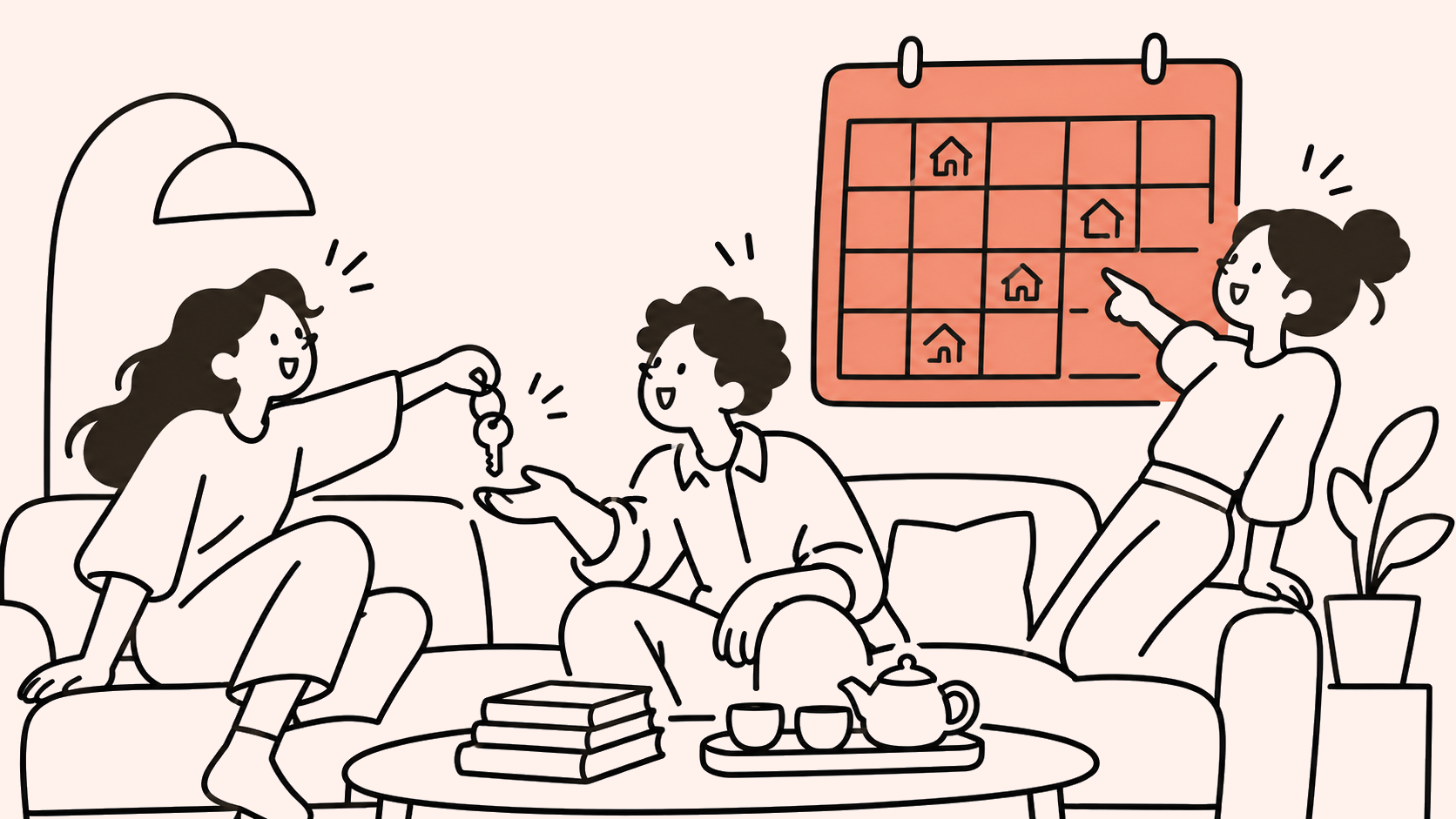
Every book club hits the same moment. Someone finishes a meeting, looks around the room, and says, "So... who's hosting next month?" Then comes the silence, the staring at the coffee table, and the one person who finally says, "I guess I can."
That person is usually the same person as last time. A hosting rotation fixes this before it turns into resentment. It takes ten minutes to set up, and it removes the most awkward question in book club from every meeting afterward.
Without a system, hosting goes to whoever has the biggest living room, the least ability to say no, or the strongest sense of guilt. None of those are good reasons.
A rotation changes the math. Everyone knows their turn is coming, so nobody feels like they're being volunteered. The group can see the whole calendar, so they can plan around vacations and busy seasons. And the person who has been quietly hosting for a year gets to finally sit on the couch with a glass of wine.
It also makes your club easier to join. A new member who sees a posted schedule knows exactly what's expected of them. That's a lot less scary than "we'll figure it out as we go."
You don't need a spreadsheet template or an app. You need a list and a calendar.
Write down every member and ask one question: "Would you rather host at your place, host somewhere else, or skip hosting and do something else?" Make all three answers acceptable. A rotation that forces every person into their own living room will lose members fast.
If you have eight members and meet monthly, a full cycle is eight months. That's fine. Longer cycles mean each person hosts less often, which makes saying yes easier.
For smaller groups of four or five, each person ends up hosting two or three times a year. That's still manageable, especially if you split the work using book club roles so the host isn't also writing questions and buying snacks.
Put names on dates for the next six to twelve months and send it to the group chat. Don't assign one month at a time. Month-by-month planning brings the silence back.
Leave a buffer around the busy stretch near the end of the year. Late fall and December are when calendars fill up, so give your most flexible members those slots or plan a lighter format, like a restaurant meetup or a holiday gift swap. Our book club calendar planning guide walks through how to map the full year.
People will have conflicts. Decide ahead of time how swaps work. The simplest rule: you can trade dates with anyone, as long as you both tell the group chat and the new host confirms. No permission required, no explanation needed.
How you order the names matters more than you'd think. These three methods cover most groups.
- Alphabetical by first name. Boring, but nobody can argue with it. Good for groups that value fairness over fun.
- Random draw. Pull names from a bowl at the first meeting of the cycle. It feels like a small event and removes any sense that someone was singled out.
- Volunteer first, fill in the rest. Let eager hosts claim dates, then assign the remaining slots. This works well when a few members love hosting and the rest are nervous.
Whichever method you pick, write it down. When a new person joins, they slot in at the end of the current cycle, not into next month's meeting.
Not everyone has a space. Some members live in tiny apartments, share a home with roommates, or have kids who make hosting a stress test. If your rotation only counts living rooms, you'll quietly push those people out.
Give them options that still count as a turn:
- Host at a neutral spot. A coffee shop back room, a library meeting space, or a park pavilion. Our guide to where to host a book club has nine venues to suggest.
- Take the "host in spirit" role. They handle the invites, the discussion questions, and the reminders while someone else provides the space.
- Host virtually. A video call turn counts the same as an in-person one. See our virtual book club tips for making it feel like more than a meeting link.
- Cover the snacks or the book. If hosting is truly off the table, a member can take over the food for an extra meeting instead.
The goal is that everyone contributes about the same amount of effort, not that everyone cleans their house.
A rotation only works if hosting feels doable. If the host spends a week cleaning and a hundred dollars on snacks, people will start dodging their turn.
Keep the bar low and the expectations clear:
- Set a snack standard. "Two shareable items, nothing fancy" saves everyone from escalating. If cost is a worry, see how groups handle splitting book club costs.
- Let guests bring something. A potluck-style approach spreads the work and takes pressure off the host.
- Share the prep. The host owns the space and the start time. Someone else brings the questions. A day-before host checklist helps first-timers know what actually matters.
- Use a ready-made kit. Instead of writing questions from scratch, the host can pull a full set in seconds. Searching for your book on Instant Book Club gives you discussion questions, icebreakers, and food pairings in one place.
For a book that makes hosting easy, try one with built-in atmosphere. Get the Where the Crawdads Sing book club kit and you have a marsh-and-seafood menu mapped out. Get the Lessons in Chemistry book club kit if your host wants a retro 1960s kitchen theme with minimal fuss.
One more option: let the host choose the book. It adds a reason to look forward to your turn, and it spreads the picking responsibility along with the hosting.
The risk is that one person's taste dominates a month. To soften that, set a few guardrails — a page limit, a rule against books the group has already read, or a requirement to bring two options for a quick vote. If your group struggles with picking, our guide on how to choose a book club book has methods that work.
A host who picks a crowd-pleaser keeps the night smooth. Get the The Housemaid book club kit for a fast-moving thriller that almost always gets people talking, or Get the Eleanor Oliphant Is Completely Fine book club kit for a character-driven pick with plenty of emotional range. You can also browse literary fiction picks or the work of Delia Owens for more ideas.
A schedule only helps if people look at it. Pin it in the group chat, repeat it at the end of each meeting, and send a short reminder two weeks before each turn.
Review it once a year. Maybe someone moved, someone joined, or someone realized they hate hosting at home. A five-minute check-in keeps the system honest without turning it into a bureaucracy.
If the rotation starts to feel like a chore, loosen it rather than abandoning it. Skip a month. Swap a house meeting for a coffee shop. The point is to keep the club going, not to enforce a rule. Our tips on how to keep a book club going cover what to do when energy dips.
A fair rotation gives your club a rhythm. A ready-made kit gives each host a head start. Search for your book on Instant Book Club and get a complete kit in 30 seconds, with discussion questions, icebreakers, food pairings, and printables the host can use without a single evening of prep.
Set the schedule once, hand each host a kit, and let the meetings take care of themselves. If you want to see the whole process in order, start with our guide on how to host a book club meeting, then find your next book.