Most book clubs don't fall apart because people stop reading. They fall apart because one person is quietly doing all the work.
The host sends the reminders. The host picks the book. The host figures out the snacks, writes the questions, and remembers to confirm who is bringing what. After a few months, that person starts suggesting "maybe we skip December" and eventually stops answering the group chat.
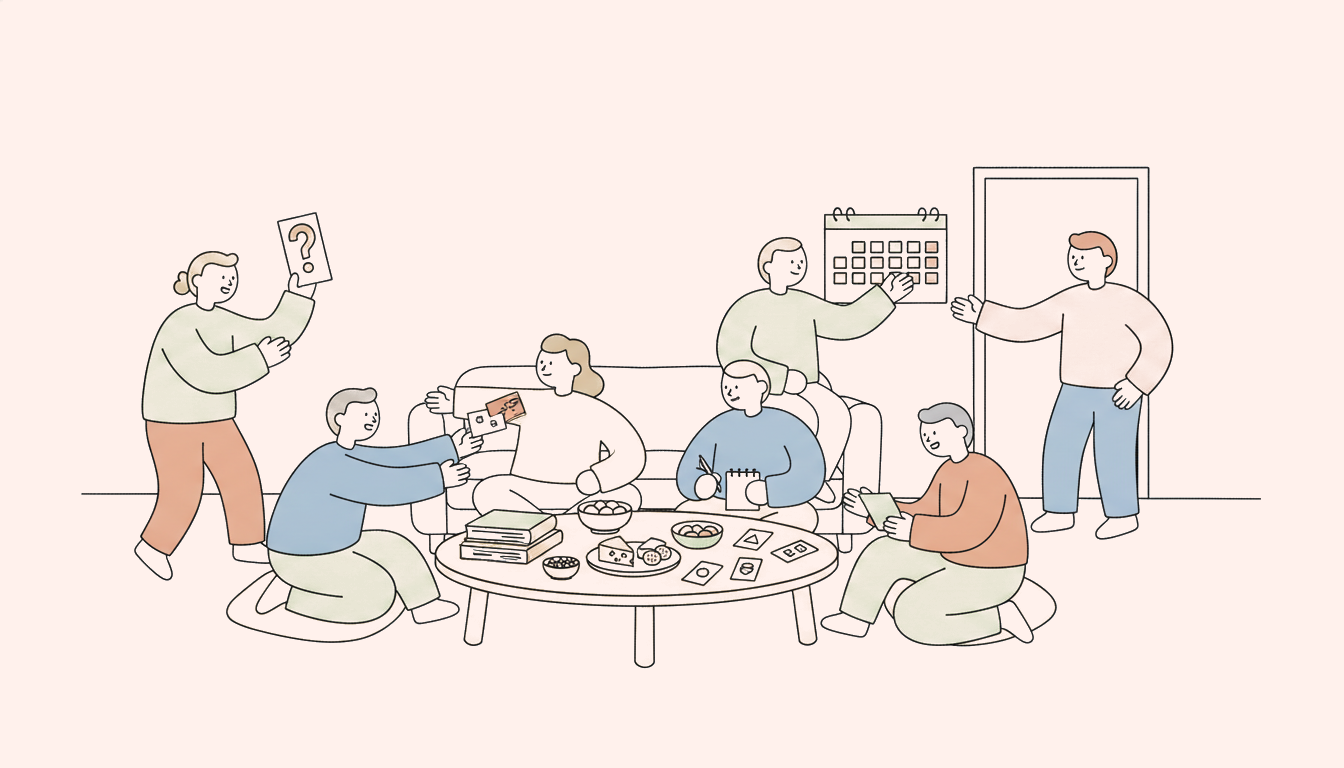
The fix is simple: spread the load. Not with a corporate org chart — just five light roles that rotate each month. Everyone owns one piece, no one owns everything, and meetings keep happening without anyone resenting them.
Enthusiasm gets a book club started. Roles keep it alive.
When responsibilities are vague, the same people step up every time. The extrovert plans. The organized person sends reminders. The foodie brings treats. This feels fine until it doesn't — until someone moves, has a baby, or just gets tired of being the only one who prepared.
Clear roles solve three problems at once:
- They lower the barrier to host. Members don't need a perfect living room or a three-course menu. They just need to show up with one job done.
- They protect the conversation. With a designated discussion lead and note-taker, nobody has to mentally juggle hosting, moderating, and remembering the schedule.
- They give everyone skin in the game. When someone owns even a small part of the meeting, they show up differently.
You don't need more than five. These cover every moving part of a meeting without creating busywork.
The host owns logistics. They pick or confirm the location, send the calendar invite, and set the start time. If the meeting is in person, they make sure there's seating. If it's virtual, they set up the link.
What the host does not own: discussion questions, snacks, or reminding people to read the book. That's what the other roles are for. The host's job is to make the room work, not to carry the whole night.
This person comes with three or four starter questions and keeps the conversation moving. They don't lecture. They don't answer every question themselves. They just make sure there's a natural arc to the discussion.
A good lead starts broad — "What was your overall reaction?" — then narrows into character, theme, and craft. They also protect quieter members by asking for their take directly when the conversation gets dominated.
If your group wants ready-made questions, search for your book on Instant Book Club and get a complete kit in 30 seconds. For a classic book that always sparks debate, Get the The Seven Husbands of Evelyn Hugo book club kit. For a thriller with plenty to unpack, Get the The Silent Patient book club kit.
Food is optional, but it shouldn't fall on the host by default. The snack coordinator plans one or two simple items tied to the book's setting, themes, or mood. Think French cheese for The Nightingale, or tea and biscuits for a cozy mystery.
The key word is simple. This isn't a dinner party. It's a conversation with something to nibble on. If you want inspiration, our book club food ideas guide has themed snacks for every genre.
A few easy wins from the kit library: Get the Where the Crawdads Sing book club kit for Lowcountry boil meets or Get the Educated book club kit for rustic, mountain-west vibes.
This person brings one short opener to get people talking before the real discussion starts. It should take five minutes, not twenty. Good examples: "What was the moment that made you keep reading?" or "Which character would you want at your dinner party?"
The icebreaker warms up the room, especially when new members are present or when the book was polarizing. For groups that need more ideas, our book club icebreaker ideas post has options for every vibe.
This person records what the group decided: next book, next host, next meeting date, and any wild-card nominations. They also send a single follow-up message within 24 hours so nobody forgets.
This role prevents the classic post-meeting drift where everyone agreed on the next book but nobody wrote it down. It's low effort and high leverage.
A bad rotation is worse than no rotation. The goal is clarity, not novelty.
Use the same simple system every month:
- Assign roles when you confirm the next meeting — ideally before anyone leaves the room.
- Rotate the host first. Once the host is set, let them pick their preferred supporting role or trade with someone else.
- Keep a shared note with the rotation history so the same person doesn't get stuck with the same role forever.
- Let people opt out of a specific role. Someone might love leading discussion but dread hosting. That's fine. Work around it.
If your group has fewer than six people, combine roles. One person can host and coordinate snacks. Another can lead discussion and take notes. The point is balance, not perfection.
They will. Plan for it.
If the snack coordinator forgets, the host grabs chips and wine. If the discussion lead didn't read the whole book, the icebreaker steps in with broader questions. If the note-taker ghosts, someone else sends a quick follow-up the next morning.
The system works because it's resilient. One missed task shouldn't derail the meeting.
Some books pair naturally with specific roles:
- Heavy historical fiction, like The Nightingale, benefits from a strong discussion lead who can guide the group through emotional terrain. Get the The Nightingale book club kit for spoiler-tagged questions and a structured discussion arc.
- Plot-driven thrillers, like Verity, need an icebreaker who can settle the group before everyone starts yelling theories at once. Get the Verity book club kit.
- Romantasy epics, like Fourth Wing, are perfect for a snack coordinator who leans into the vibe with themed drinks and decorations. Get the Fourth Wing book club kit.
For clubs that want less friction, assign roles in batches. Plan the next three months at once:
- Month 1: Host A, Lead B, Snacks C, Icebreaker D, Notes E
- Month 2: Host B, Lead C, Snacks D, Icebreaker E, Notes A
- Month 3: Host C, Lead D, Snacks E, Icebreaker A, Notes B
This removes the monthly "who is doing what again?" conversation and lets people prepare. Post it where everyone can see it — a pinned message, shared calendar description, or simple spreadsheet.
The whole point of roles is to remove stress, not add it. If your group starts treating a book club like a committee meeting, something has gone wrong. The roles should take five minutes to assign and two minutes to review. Anything heavier is overkill.
A good test: if a member can explain their role in one sentence, it's right. If it needs a document, it's too much.
Book clubs last when everyone feels like a participant, not a passenger. A simple role system turns passive members into active contributors — and keeps your most dedicated host from quietly burning out.
If you want to make the planning even easier, search for your book on Instant Book Club and get a complete kit with discussion questions, icebreakers, food pairings, and a vibe board in under a minute.
Related: