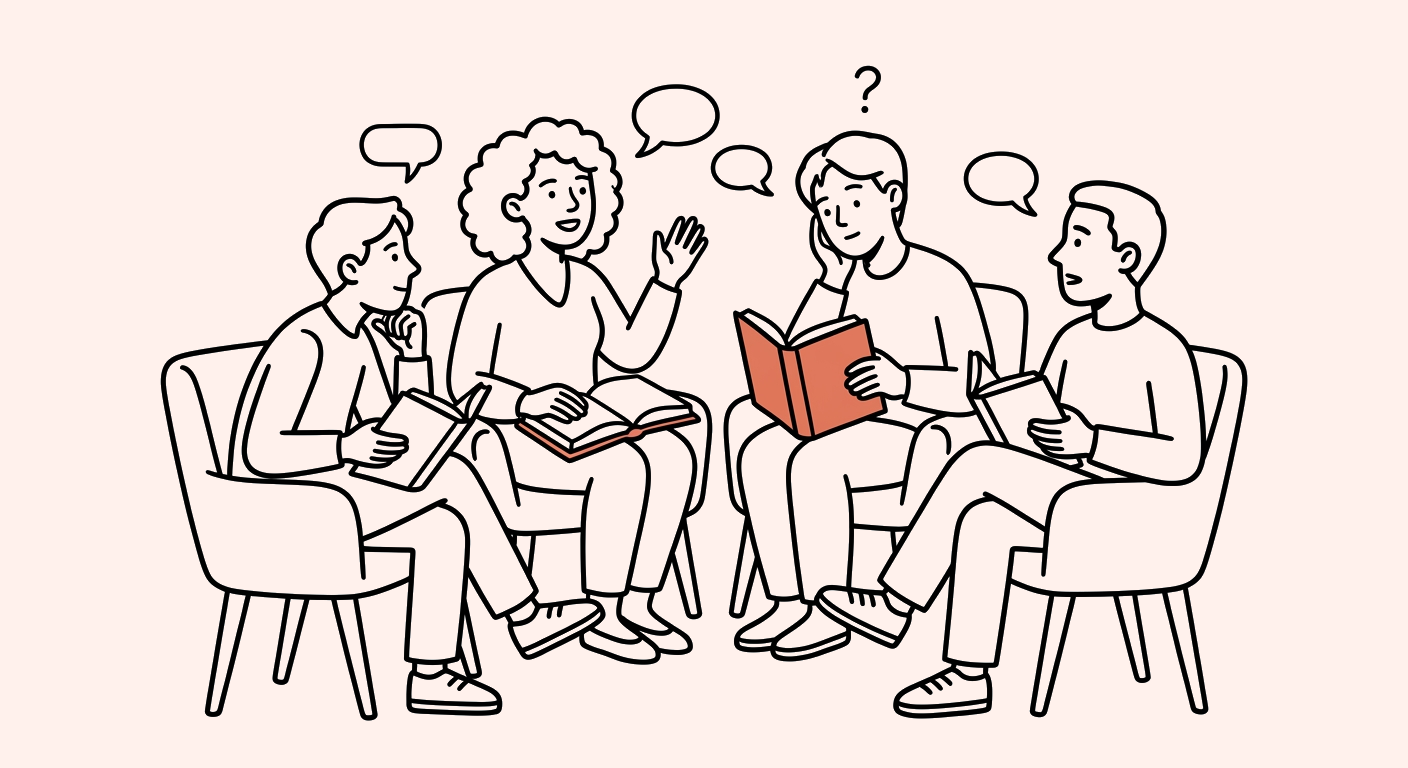
Some books hit harder than others. A memoir about survival, a novel built around abuse, a story rooted in war or grief — these are the reads that spark the deepest conversations, but only if your group knows how to hold them. Get it wrong and the night turns into either a therapy session nobody signed up for or a stiff, avoidant chat where everyone tiptoes around the real stuff.
The good news: a few simple boundaries and a little prep can turn a potentially heavy night into one of the most meaningful meetings your book club has.
The best sensitive discussions start days or weeks before the meeting. When you pick a heavier title, give members a heads-up about the themes. You don't need to write a content warning essay — a single sentence in the group chat or calendar invite is enough: Just a note: this one deals with domestic violence and grief, so come prepared for a heavier conversation.
That warning isn't about censorship. It's about consent. People read differently when they know what's coming, and they show up differently when they know the night may ask more of them emotionally.
Three pre-meeting habits that help:
- Name the themes early. Domestic violence, addiction, racism, sexual assault, suicide, child loss — don't hide the subject behind euphemisms.
- Make attendance optional without shame. A heavy pick is a valid reason to sit one out. Keep the door open for the next book.
- Share discussion questions ahead of time. Questions like the ones in our It Ends with Us book club kit let people think before they feel put on the spot.
Sensitive books often rely on reveals. A badly timed spoiler can flatten the emotional arc for someone still reading, and in a heavy book that arc matters more than usual. If your group usually chats casually, tighten the rules for these picks.
Our full guide covers this in depth, but the short version is: agree on a page or chapter cutoff for "open discussion," and create a separate space — a thread, channel, or labeled message — for spoiler talk. Keep the main meeting spoiler-free until everyone confirms they're caught up.
For books with major late reveals, like Verity or The Silent Patient, this is non-negotiable. The experience changes dramatically if the twist lands cleanly.
When the meeting begins, take thirty seconds to remind everyone of the container. Not a lecture — just a quick reset. Something like:
"This book goes to some dark places. The goal tonight isn't to fix anything or debate who's right. It's to share what landed for each of us and listen without trying to correct anyone's reaction."
Then offer an exit ramp. Let people know it's okay to pass on a question, to take a break, or to step out if they need air. That permission alone lowers the temperature.
The wrong question can make a vulnerable member feel cross-examined. The right question gives them room to share as much or as little as they want.
Avoid questions that assume universal experience or demand a strong opinion:
- "Why would she stay with him?"
- "Did anyone else think the victim was naive?"
- "Isn't the author just being manipulative here?"
Better alternatives:
- "What moment in the book felt hardest to read, and what does that tell us about the author's choices?"
- "How did the author make us understand a character's decision without necessarily asking us to agree with it?"
- "What does this story reveal about power, loyalty, or survival that a lighter book couldn't?"
Books like The Kite Runner and Educated are built on moral complexity. The richest discussions come from examining how the author frames a choice, not from judging the characters for making it.
Heavy books can pull personal stories out of people. That's often beautiful — but it can also shift the meeting from book discussion to group processing. There's nothing wrong with someone sharing why a scene resonated with their own life, but as the host you should gently redirect when the conversation stops being about the text.
A simple redirect: "That connection is really powerful. How do you think the author earned that moment in the story?"
This honors the share while bringing the group back to craft, theme, and narrative choice.
You don't have to cover every discussion question. If the energy in the room shifts — someone gets quiet, tears start, the jokes get defensive — pause. Offer a five-minute break. Switch to a lighter question. End early if you need to.
Trust the room over the agenda. A shorter, honest conversation beats a forced march through every bullet point.
One of the biggest mistakes in discussing sensitive topics is treating the book like a case study. Your book club is not a support group, and nobody there is a trained counselor — unless they actually are. Keep the focus on the story: what the author chose to show, what they left out, and how the narrative shapes our emotional response.
For historical trauma, this is especially important. The Nightingale opens up space to talk about women's wartime courage and moral compromise without requiring anyone in the room to speak for survivors.
Don't let the meeting drift off into awkward silence after a heavy final chapter. Close deliberately. A few options:
- One takeaway: Ask everyone to share a single line, image, or idea they'll carry with them.
- A lighter bridge: Mention the next book and give people something to look forward to.
- A check-in: Send a quick message the next day — How are you feeling after last night? — especially if the book was particularly intense.
If your group wants to lean into this, these cached kits are built around complicated emotional territory:
Each one comes with discussion questions, food and drink pairings, icebreakers, and printable materials so you can focus on hosting instead of scrambling for content.
Hosting a book club discussion on a sensitive book takes more care than hosting one on a cozy mystery. But the payoff is real. These are the nights where people leave feeling genuinely connected — not because they agreed on everything, but because the room held a hard story well.
Set boundaries. Ask better questions. Protect the spoiler moments. And remember: you don't need to have all the answers. You just need to keep the conversation honest, kind, and rooted in the book.
Related:
Ready to plan your next meeting? Search for your book on Instant Book Club and get a complete kit — discussion questions, food pairings, icebreakers, and printable decorations — in about 30 seconds.