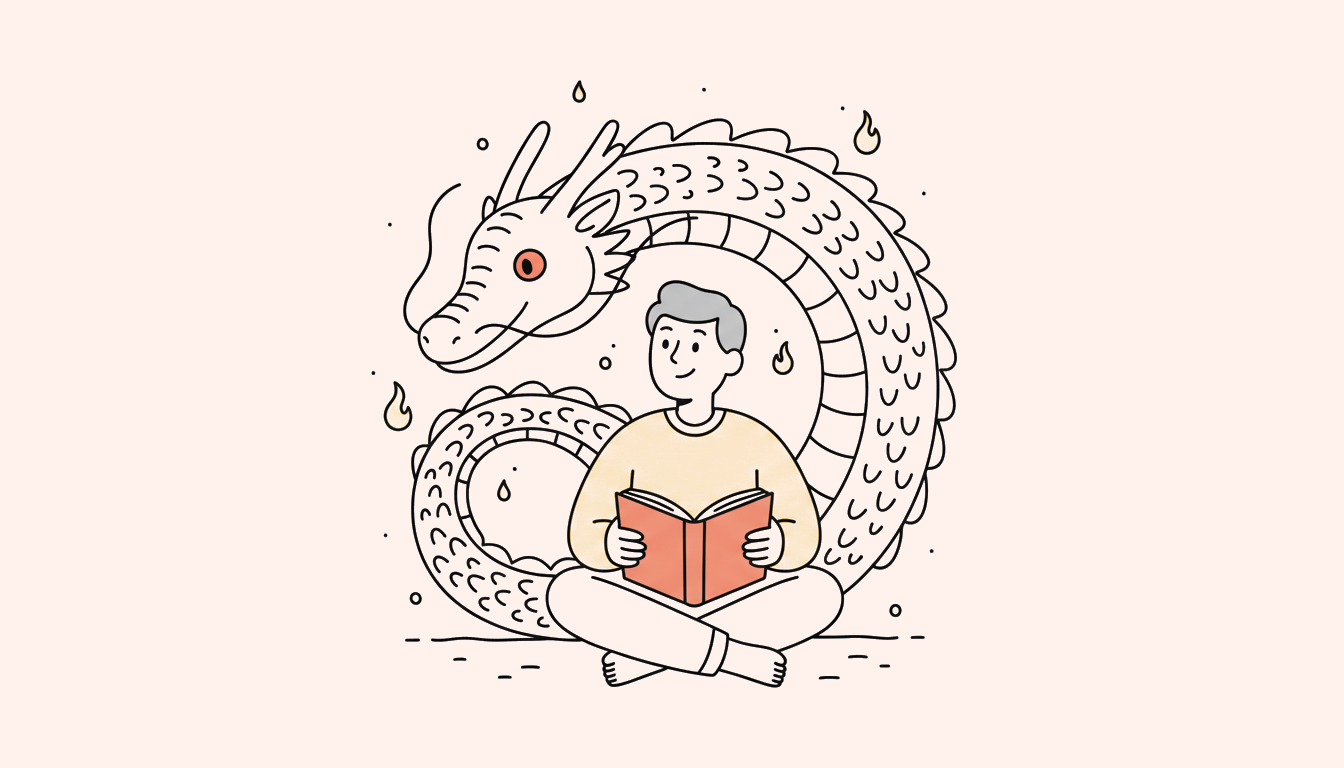
Rebecca Yarros's Fourth Wing dropped your book club into a war college where students ride dragons or die trying — and everyone has opinions about it. Whether your group devoured it in a single weekend or is still arguing about that ending, these questions will take your discussion beyond "Team Xaden or Team Dain" and into the choices, themes, and moral grey areas that make this book worth talking about.
Here are the questions that will get your meeting off the ground — pun fully intended.
Violet was supposed to be a scribe. Instead, her mother forces her into the Riders Quadrant, where the weak don't survive. That decision shapes everything.
- Violet's mother sends her into a program with a significant mortality rate. Is General Sorrengail protecting Violet by forcing her to be strong, or is she gambling with her daughter's life? Can it be both?
- How does Violet's physical fragility — her smaller frame, her joint condition — change the way you read the combat scenes? Did you find yourself more invested because of it?
- Violet adapts by relying on strategy and knowledge rather than brute strength. What does the book say about different kinds of power? Is Yarros making a statement about how we define strength?
- Would you have chosen the Scribe Quadrant? Be honest.
The bonding between riders and dragons is the heart of Fourth Wing's magic system — and it raises questions about consent, destiny, and what it means to be chosen.
- Tairn chooses Violet, which surprises everyone. What do you think drew him to her? Is it her character, her bloodline, or something else entirely?
- Andarna is the real wildcard. Why do you think a second dragon bonds with Violet when that's supposedly impossible? What does Andarna represent in the story?
- The dragons can kill riders who approach them. The bonding isn't a gentle process — it's a test. How does this change the way you think about the rider-dragon relationship compared to other fantasy series?
- If you could bond with any dragon from the book, which would you choose and why?
Fourth Wing is built on a foundation of broken trust — between friends, between lovers, and between institutions and the people they're supposed to protect.
- Dain is Violet's childhood best friend, but his actions throughout the book range from overprotective to outright controlling. At what point did your opinion of him shift? Did anyone in your group defend him?
- Xaden is positioned as dangerous from page one. How does Yarros manipulate reader expectations around him? When did you start trusting him — and should you have?
- The reveal at the end reframes much of what came before. Without spoiling specifics — did you see it coming? How did it change your reading of Xaden's earlier behavior?
- Violet's mother has been lying to everyone about the state of the wards. Is she a villain, a pragmatist, or something more complicated?
Basgiath War College operates on a philosophy that the strong survive and the weak die. It's brutal by design — and the book asks you to sit with that.
- The Riders Quadrant has a staggering death rate during training. Is there a justification for this system, or is it needlessly cruel? Does the existence of a real external threat change your answer?
- Jack Barlowe represents the worst of what a "survival of the fittest" system produces. Is he an anomaly, or is he a natural outcome of the Quadrant's values?
- How does the social hierarchy among cadets mirror real-world power structures? Did the political tensions between "marked ones" and other cadets remind you of anything?
- Yarros shows us characters who thrive in this system and characters who are destroyed by it. Who does the system actually serve?
The Violet-Xaden relationship operates under layers of power imbalance — he's her wingleader, a revolutionary's son, and someone with his own hidden agenda.
- Does the power imbalance between Violet and Xaden bother you? How does Yarros handle the tension between romantic chemistry and structural inequality?
- Xaden withholds information constantly. Violet calls him out on it, but the relationship deepens anyway. Is the book romanticizing secrecy, or is it showing the messy reality of falling for someone in a high-stakes environment?
- Compare the Violet-Xaden dynamic to Violet's relationship with Dain. What does each relationship reveal about what Violet values — and how she's changing?
- The "enemies to lovers" trope drives much of the tension. Does the trope work here, or does the real-world context of the story (a war, a conspiracy, genuine danger) complicate it?
Every character in Fourth Wing is living in the shadow of someone else's choices — parents, commanders, governments.
- Violet carries her mother's reputation everywhere she goes. How does parental legacy shape the characters in this book? Think about Xaden, Dain, and Violet specifically.
- The marked ones are children of revolutionaries, punished for their parents' actions. How does Yarros use their storyline to comment on generational punishment?
- By the end of the book, Violet's understanding of her world has fundamentally shifted. What has she lost in gaining that knowledge? Is ignorance ever truly a form of protection?
- Fourth Wing is the first in a series. How does Yarros balance giving you answers with leaving you desperate for the next book? Did the ending feel earned or manipulative?
If your group wants to push past the plot and into craft — these are worth exploring.
- Yarros uses first-person present tense. How does that choice affect the pacing and tension? Would the book hit differently in past tense?
- The worldbuilding unfolds gradually — no info dumps, just discovery alongside Violet. Did this approach work for you? Were there moments you wanted more exposition?
- Fourth Wing has been compared to Ender's Game, Hunger Games, and Eragon. Which comparison fits best? What does Fourth Wing do that those books don't?
- The book has been a massive commercial hit. Why do you think it resonated so widely? Is it the dragons, the romance, the school setting, or something harder to pin down?
If Fourth Wing is on your reading list, grab the Fourth Wing book club kit — it comes with discussion questions, themed food pairings, icebreakers, and printable decorations so you can focus on the conversation instead of the planning.
Reading the full series? We also have kits for Iron Flame and Onyx Storm. And if your group loves fantasy, check out the A Court of Thorns and Roses kit or Circe for your next pick.
Search for any book on Instant Book Club and get a complete meeting kit in 30 seconds — questions, food, decorations, the works.
More from the blog: How to Host a Book Club Meeting · How to Start a Book Club · Best Book Club Books for 2026